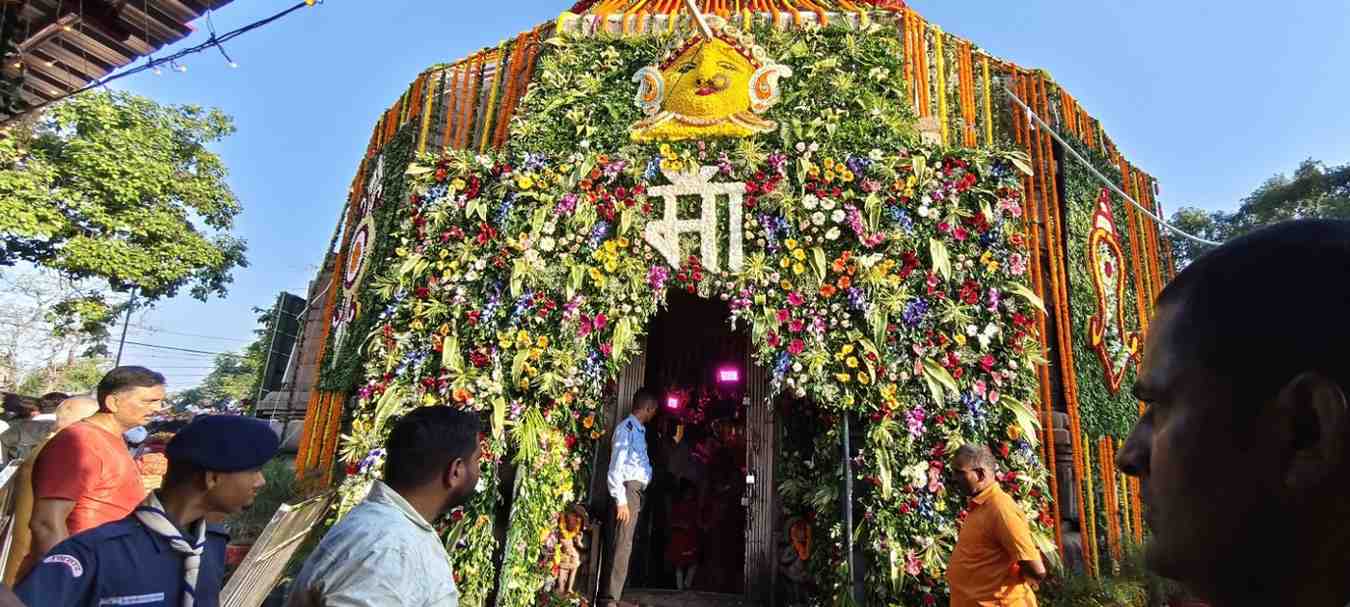
Maa Mundeshwari Temple, located on the scenic Mundeshwari Hills in the Kaimur district of Bihar, is widely regarded as one of the oldest continuously worshipped Hindu temples in India. For centuries, devotees have visited this sacred temple to seek the blessings of Maa Mundeshwari, a revered form of Goddess Durga, and Lord Shiva. Because of its uninterrupted worship, remarkable architecture, and historical significance, the temple is often referred to as the oldest temple in Bihar.
Every year, thousands of pilgrims, historians, archaeologists, and tourists visit this ancient shrine to experience its spiritual atmosphere and admire its unique stone architecture. The temple represents an extraordinary blend of faith, history, and culture, making it one of Bihar's greatest religious and heritage attractions.
1. Why is Maa Mundeshwari Temple Known as the Oldest Temple in Bihar?
Maa Mundeshwari Temple is believed to date back nearly 1,900 years and is widely recognized as one of the oldest surviving Hindu temples where worship has continued without interruption. Unlike many ancient monuments that are preserved only as archaeological sites, Maa Mundeshwari Temple remains an active place of worship even today.
This continuous tradition of daily पूजा (worship) makes the temple unique among India's ancient religious monuments and strengthens its reputation as the oldest temple in Bihar.
2. Historical Background of Maa Mundeshwari Temple
The history of Maa Mundeshwari Temple stretches back to the early centuries of Indian civilization. Historians believe the temple was constructed during the Gupta or post-Gupta period, although archaeological studies continue to explore its exact origin.
Ancient inscriptions, sculptures, and architectural remains found around the temple indicate that the site has been an important center of religious activity for many centuries. Over time, different rulers contributed to its preservation, allowing this magnificent temple to survive through changing historical periods.
3. Unique Architecture of the Temple
One of the most fascinating aspects of Maa Mundeshwari Temple is its rare octagonal design. Most Hindu temples are built using square or rectangular layouts, but this temple follows an eight-sided architectural plan that is rarely seen elsewhere in India.
The beautifully carved stone pillars, detailed sculptures, and carefully designed structure demonstrate the advanced engineering skills of ancient Indian craftsmen. Even after centuries, much of the original stone architecture remains remarkably well preserved.
4. Religious Importance
Maa Mundeshwari Temple is dedicated to Maa Mundeshwari, a powerful form of Goddess Durga. At the same time, devotees also worship the sacred Panchmukhi Shivling inside the temple complex. This rare combination of Shakti and Shiva worship makes the temple spiritually significant for followers of both traditions.
During Chaitra Navratri and Sharadiya Navratri, thousands of devotees from Bihar, Uttar Pradesh, Jharkhand, and neighboring states visit the temple to offer prayers and seek blessings.
5. Recognition by the Archaeological Survey of India (ASI)
The Archaeological Survey of India (ASI) recognizes Maa Mundeshwari Temple as one of India's important protected monuments. The organization continues to conserve the temple's ancient architecture, sculptures, inscriptions, and historical remains.
Researchers from different institutions regularly study the temple because it provides valuable information about early Hindu temple architecture and ancient Indian religious traditions.